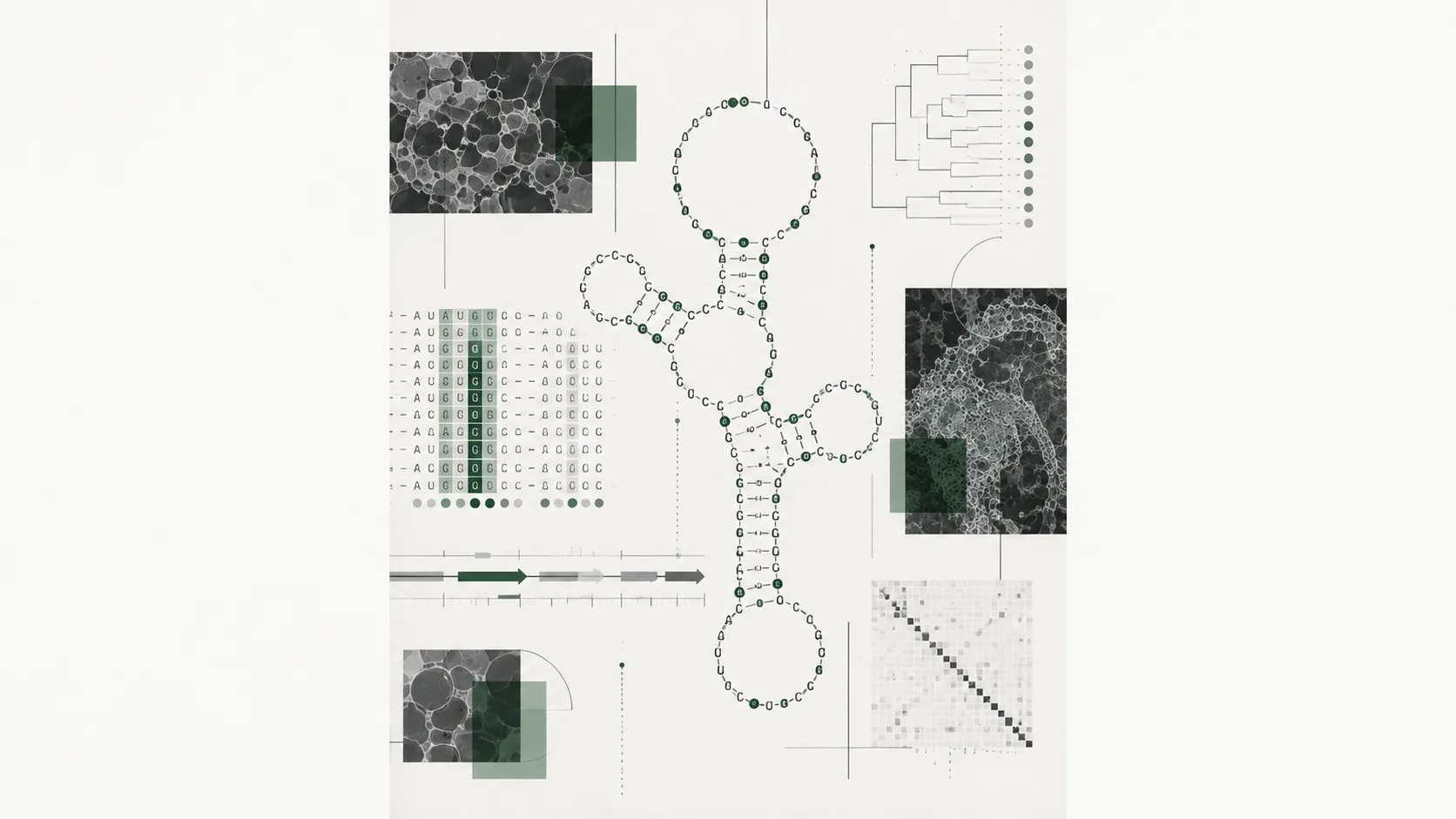
The Challenge of Diagnostic Assay Design
Designing molecular diagnostic primers and dual-labeled hydrolysis probes requires balancing competing biochemical and thermodynamic constraints. Primers with suboptimal melting temperatures (), excessive self-complementarity (hairpins or primer-dimers), or off-target cross-reactivity directly cause assay failure or false-positive amplifications.
When engineering PrimerLab Genomic, our goal was to replace ad-hoc scripts with a deterministic, modular framework grounded in Domain-Driven Design (DDD).
Core Architectural Pillars
Pure mathematical validation (GC skew, length bounding, Tm variance) is isolated from external CLI binaries, enabling rapid in-memory testing without third-party dependencies.
Integrating ViennaRNA (RNAfold / RNAduplex) allows rigorous Gibb's free energy scoring (ΔG < -3.0 kcal/mol thresholding) to eliminate stable hairpins and cross-dimers before synthesis.
Simulating terminal 3' binding stability and amplicon lengths against diverse non-target host backgrounds prevents off-target cross-hybridization.
Deterministic output structuring generates standardized JSON manifests, human-readable HTML summary dashboards, and IDT-compatible 96-well synthesis orders.
Decoupling algorithmic domain rules from external command-line utilities is the secret to building resilient bioinformatics toolkits.
Practical Takeaways for Computational Biologists
- Parameterize salt conditions carefully: SantaLucia nearest-neighbor thermodynamic parameters assume fixed monovalent () and divalent () ion concentrations.
- 3’ end stability matters most: Minimize duplex stability in the terminal 5 base pairs of the 3’ end to prevent non-specific mispriming, while ensuring an internal GC clamp for polymerase initiation.
- Automate regression tests: High test coverage (>90%) with synthetic sequence edge-cases prevents silent drift across Python releases.