Introduction
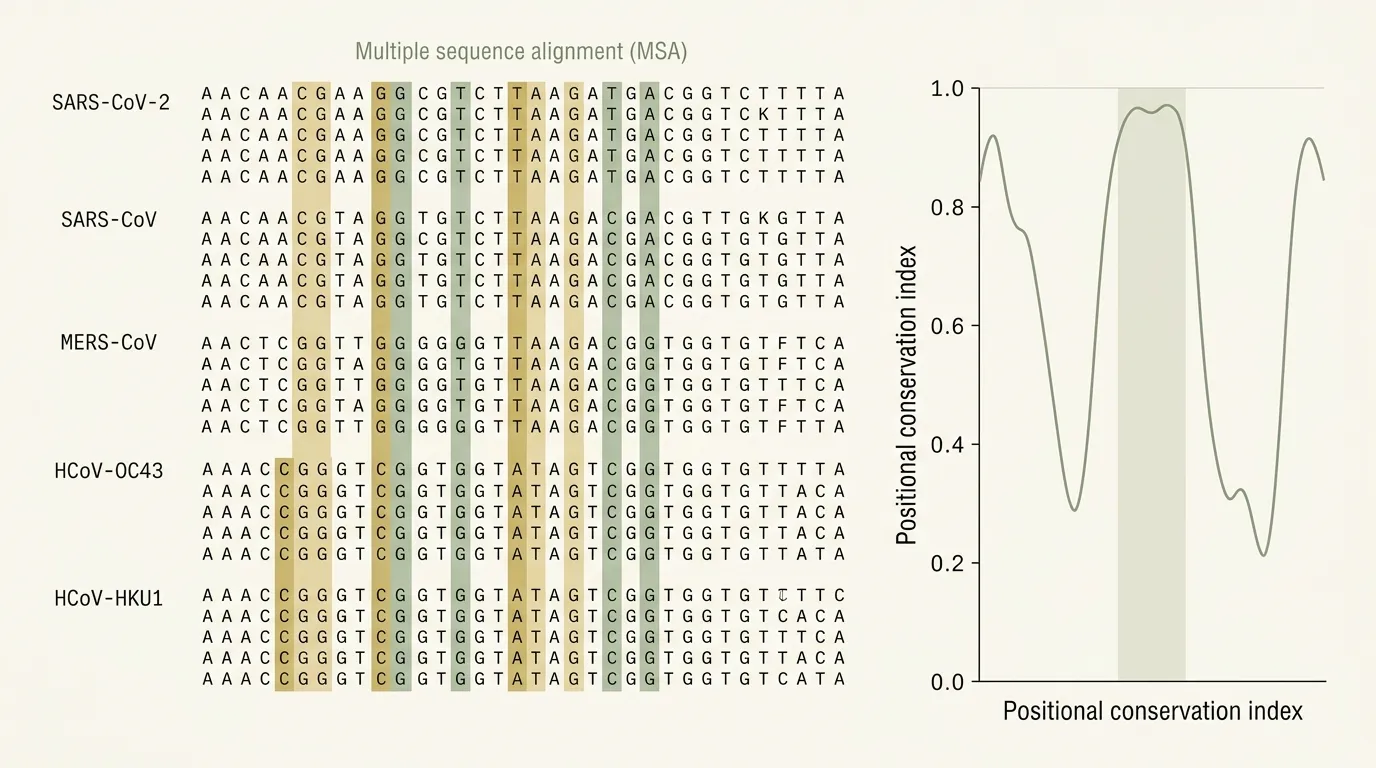
In molecular diagnostics, selecting the right genomic target is critical. Conserved regions — segments of the genome that remain relatively unchanged across strains or species — offer significant advantages for the development of reliable and broadly reactive assays. This note summarizes why conserved regions matter, how to identify them, and what to consider when designing diagnostic primers or probes.
Why Conserved Regions?
Reduces the risk of false negatives due to mutations or primer-template mismatches in variable regions.
Works reliably across multiple strains, variants, sub-lineages, or related clinical species.
Minimizes cross-reactivity with commensal microflora or host genomic sequences when properly selected and validated.
Maintains diagnostic surveillance performance even as the pathogen population undergoes evolutionary drift.
Conserved regions aren’t just stable — they’re strategic.
How to Identify Conserved Regions
Conserved regions can be identified through comparative genomics, multiple sequence alignments (MSA), and positional entropy analysis. Tools like MAFFT, Clustal Omega, and Nextclade help visualize conservation across sequences, while per-base Shannon entropy scores highlight low-variability genomic windows.
When calculating positional conservation scores across thousands of isolate genomes, we prioritize stretches of at least 20–25 nucleotides with zero non-synonymous mutations across reference clades. This ensures primer binding kinetics remain optimal under standard isothermal or thermocycling conditions.
Considerations in Diagnostic Design
- Avoid high-mutation structural regions: Exclude surface glycoproteins subject to immune selection pressure (e.g. Spike receptor-binding domains).
- Validate primer/probe binding across multiple clades: Test target affinity in silico across all circulating lineages to guarantee universal detection.
- Screen against host and commensal genomes: Run local BLAST or k-mer matching to rule out non-specific off-target hybridization.
- Perform thermodynamic stability checks: Use Primer3 and ViennaRNA to verify minimal hairpin formation and self-dimerization under assay temperatures.
Final Thoughts
Conserved regions provide a solid foundation for developing robust molecular diagnostics, but they are only part of the picture. Practical validation, analytical sensitivity benchmarking, and continuous surveillance are essential to ensure long-term effectiveness in the face of ongoing viral evolution.