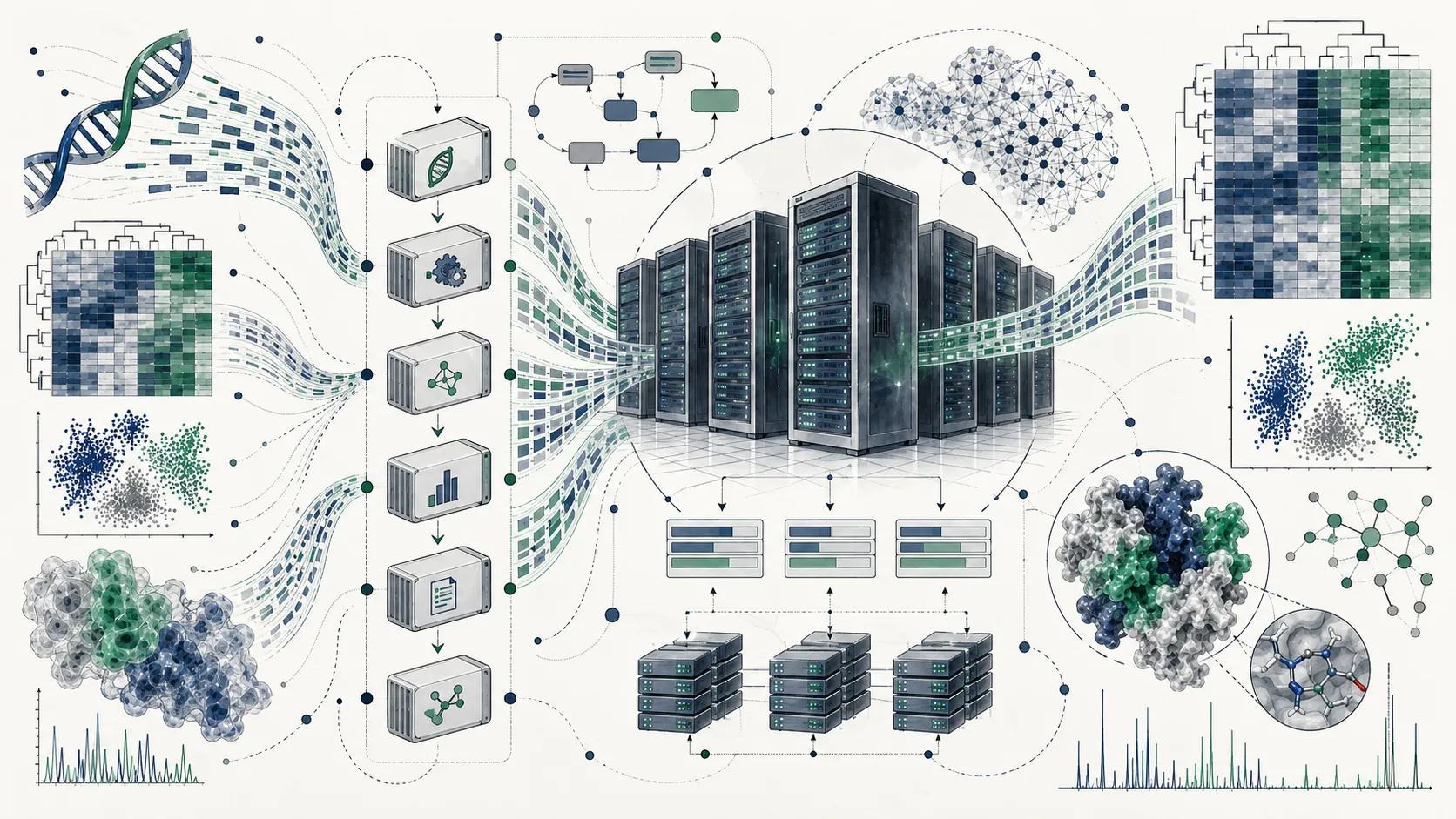
The Silent Crisis in Computational Biology
Bioinformatics pipelines fail notoriously often when transitioning from local workstations to high-performance computing (HPC) environments. Hidden system libraries, unpinned bioconda builds, uncheckpointed intermediate files, and volatile directory structures turn scientific workflows into fragile, one-off scripts.
Whether engineering large-scale resistome co-localization or viral surveillance pipelines, adhering to disciplined orchestration standards transforms computational workflows into permanent scientific assets.
Core Engineering Principles
Never rely on a monolithic base environment. Every pipeline rule must define its own isolated environment using pinned conda locks or container digests (Docker/Singularity).
Snakemake orchestrates step execution strictly based on file targets rather than sequential shell scripts, allowing seamless resumption (--rerun-incomplete) when cluster walltimes expire.
Decouple computational logic from cluster hardware by utilizing modular SLURM profiles (--profile profiles/slurm) with adaptive thread and memory allocations.
Marking raw FASTQ downloads and intermediate BAM alignments as temp() guarantees automatic cleanup upon downstream contig assembly, preventing multi-terabyte storage blowouts.
A reliable scientific workflow separates pipeline definition from execution environment, configuration parameters, and cluster infrastructure.
Practical Recommendations for Production Runs
- Benchmark Memory per Rule: Leverage Snakemake’s built-in
benchmark:directive to log exact CPU-hours and peak resident set size (RSS) memory consumption per sample. - Centralize Tunable Parameters: Maintain a dedicated
config.yamlwith schema validation to isolate biological parameters (e.g. sequence identity thresholds, minimum contig lengths) from rule logic. - Continuous Synthetic Verification: Maintain a micro-test cohort (e.g. 2 samples downsampled to 10k reads) executing on GitHub Actions runners to catch environment dependency shifts before full-scale batch processing.