Network Pharmacology Toolkit: Systematic Analysis of Herbal Medicine Mechanisms
A modular Python framework integrating compound collection, SwissTargetPrediction, STRING PPI network analysis, and molecular dynamics simulation for botanical drug discovery.

THE QUESTION
How can multi-layered network pharmacology and molecular dynamics simulations decipher the polypharmacological mechanisms of complex herbal extracts against multi-factorial diseases?
BACKGROUND
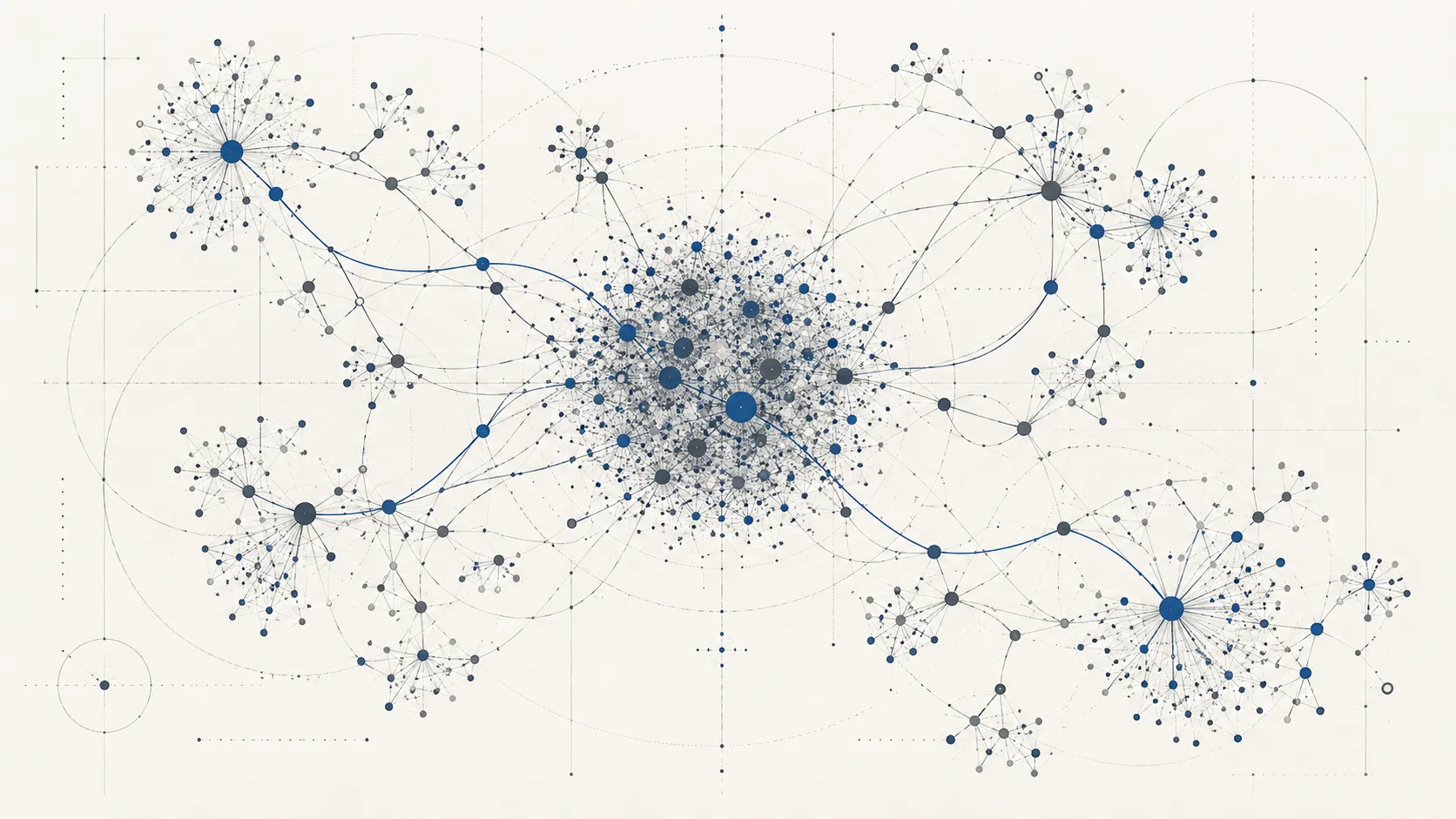
Botanical medicines exhibit multi-component, multi-target mechanisms that confound classical single-molecule drug discovery. The Network Pharmacology Toolkit provides a config-driven computational pipeline connecting chemical identification, target prediction, disease interactome mapping, ADMET screening, and molecular dynamics to systematically prioritize therapeutic candidates.
APPROACH OVERVIEW
COMPOUND MINING & CURATION
Automated retrieval of phytochemical constituents from KNApSAcK and PubChem, standardizing Canonical and Isomeric SMILES.
TARGET PREDICTION & MAPPING
High-probability human target prediction via SwissTargetPrediction API with UniProt mapping and confidence scoring.
DISEASE INTERACTOME INTEGRATION
Querying DisGeNET, GeneCards, and OMIM to map disease-associated targets and identify intersection sets.
PPI NETWORK TOPOLOGY & ENRICHMENT
Construction of STRING protein-protein interaction networks, degree centrality ranking for hub genes, and KEGG pathway enrichment.
ADMET, DOCKING & 50ns MD
Lipinski/Veber rule filtering, AutoDock Vina binding affinity calculations, and 50ns GROMACS MD stability simulations.
METHODS
- •Phytochemical Profiling: Automated database queries across KNApSAcK, PubChem API, and literature records.
- •Target Identification: SwissTargetPrediction probability thresholding (> 0.10) with UniProt accession standardization.
- •Topological Analysis: NetworkX and STRING API (confidence score > 0.70) calculating degree, betweenness, and closeness centrality.
- •ADMET Screening: RDKit calculation of molecular weight, LogP, topological polar surface area (TPSA), and rotatable bonds.
- •Simulation Validation: GROMACS 50ns production MD trajectories (CHARMM36 force field, TIP3P water, 310 K) evaluating RMSD and H-bond stability.
KEY DATA SNAPSHOT
RESULTS
Applied to Diabetic Nephropathy as a case study, the pipeline identified 15 bioactive compounds in Phaleria macrocarpa and 89 overlapping disease targets. TNF, AKT1, and IL6 emerged as top hub genes governing PI3K-Akt signaling, while luteolin demonstrated stable PDE5A binding over 50ns molecular dynamics simulation.
DISCUSSION
Network pharmacology provides an objective, computational bridge between empirical herbal medicine and modern molecular pharmacology.
Combining static network degree centrality with molecular dynamics trajectory validation filters false-positive in silico target predictions.
The config-driven YAML architecture enables rapid adaptation of the pipeline to any botanical species and pathology pair.
LIMITATIONS
- •Target prediction relies on chemical similarity algorithms that may underestimate novel, uncharacterized scaffolds.
- •Synergistic pharmacokinetic interactions in vivo (e.g., bioavailability enhancement) require animal validation.
IMPACT & APPLICATION
DATA & REPRODUCIBILITY
Analytical code and specific target coordinates are currently held under institutional review and confidential protocol.
REFERENCES
- 01Hopkins, A. L. (2008). Network pharmacology: the next paradigm in drug discovery. Nature Chemical Biology, 4(11), 682–690.
- 02Daina, A. et al. (2019). SwissTargetPrediction: updated data and new features for efficient prediction of protein targets of small molecules. Nucleic Acids Research, 47(W1), W357–W364.
- 03Szklarczyk, D. et al. (2023). The STRING database in 2023: protein–protein association networks with increased coverage and high-throughput experimental data. Nucleic Acids Research, 51(D1), D638–D646.