TCGA LUAD Transcriptomic Analysis: Differential Expression & Pathway Enrichment
End-to-end RNA-seq bioinformatics pipeline analyzing TCGA Lung Adenocarcinoma (LUAD) transcriptomics to identify 2,648 significant DEGs and disrupted oncogenic pathways.
THE QUESTION
How do large-scale RNA-seq transcriptomic profiles from TCGA distinguish tumor from normal lung tissue, and what molecular pathways characterize lung adenocarcinoma pathogenesis?
BACKGROUND
Lung adenocarcinoma (LUAD) is the leading cause of cancer mortality worldwide. Understanding its molecular pathogenesis requires robust statistical profiling of high-throughput RNA-seq data from patient cohorts. This research establishes a reproducible transcriptomic pipeline querying 594 TCGA LUAD samples to uncover dysregulated genes, survival biomarkers, and biological pathway alterations.
APPROACH OVERVIEW
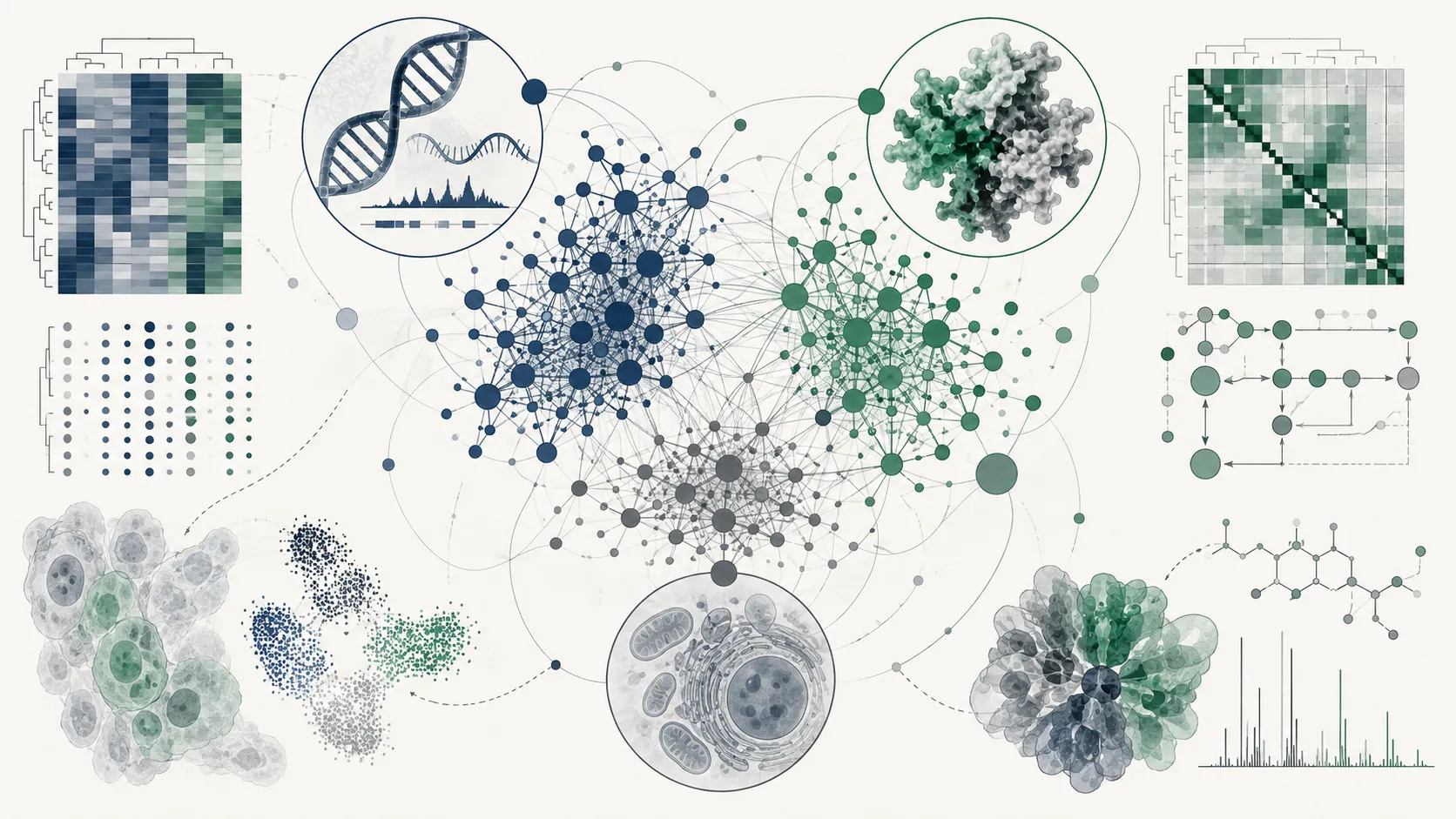
COHORT RETRIEVAL & NORMALIZATION
Ingestion of TCGA LUAD RNA-seq dataset (594 samples: 535 tumor, 59 normal) via UCSC Xena, applying log2(TPM + 1) transformation and expression filtering.
DIFFERENTIAL EXPRESSION TESTING
Independent Welch's t-test across 26,872 genes with Benjamini-Hochberg False Discovery Rate (FDR) multiple testing correction.
VOLCANO & CLUSTERING VISUALIZATION
Generation of publication-ready volcano plots (|log2FC| > 1.0, FDR < 0.05) and hierarchical clustering heatmaps of top DEGs.
FUNCTIONAL ENRICHMENT (GSEA)
Gene Set Enrichment Analysis across Gene Ontology (BP, MF) and KEGG pathways using gseapy and Enrichr API integration.
BIOLOGICAL INTERPRETATION
Systematic mapping of cell cycle hyperproliferation, loss of alveolar surfactant identity, and tumor suppressor downregulation.
METHODS
- •Cohort Selection: TCGA LUAD cohort comprising 535 primary lung adenocarcinoma and 59 solid normal lung tissue samples.
- •Data Normalization: Transcripts Per Million (TPM) values transformed via log2(TPM + 1), filtering low-abundance genes (mean TPM < 1.0).
- •Statistical Testing: Welch independent t-test with Benjamini-Hochberg False Discovery Rate correction; threshold FDR < 0.05 and |log2FC| > 1.0.
- •Pathway Enrichment: Over-representation analysis (ORA) and GSEA against GO Biological Process, Molecular Function, and KEGG databases.
- •Data Integration: Automated gene identifier mapping via MyGene.info API for robust HGNC symbol and Entrez ID cross-referencing.
KEY DATA SNAPSHOT
RESULTS
Identified 2,648 significant DEGs (9.9% of tested transcriptome). Upregulated genes were heavily dominated by cell cycle and mitotic machinery (TOP2A, TPX2, UBE2C, MKI67), while normal lung alveolar markers (SFTPC, AGER, CAV1) were profoundly downregulated, reflecting dedifferentiation and loss of pulmonary architecture.
DISCUSSION
Massive upregulation of mitotic spindle and kinetochore components (TOP2A log2FC 4.82, TPX2 log2FC 4.56) highlights targetable genomic instability in LUAD.
Downregulation of pulmonary surfactant proteins (SFTPC log2FC -4.52) and alveolar identity markers confirms cellular dedifferentiation characteristic of aggressive adenocarcinomas.
Downregulation of CAV1 and HHIP indicates simultaneous inactivation of caveolar tumor suppressor networks and Hedgehog-mediated growth restraint.
LIMITATIONS
- •Bulk RNA-seq yields averaged expression across heterogeneous cell populations without resolving intratumoral stromal or immune sub-compartments.
- •Clinical retrospective cohort lacks real-time pharmacological response tracking across modern targeted kinase inhibitors.
IMPACT & APPLICATION
DATA & REPRODUCIBILITY
Analytical code and specific target coordinates are currently held under institutional review and confidential protocol.
REFERENCES
- 01Cancer Genome Atlas Research Network. (2014). Comprehensive molecular profiling of lung adenocarcinoma. Nature, 511(7511), 543–550.
- 02Goldman, M. J. et al. (2020). Visualizing and analyzing cancer genomics data via the UCSC Xena platform. Nature Biotechnology, 38(6), 675–678.
- 03Subramanian, A. et al. (2005). Gene set enrichment analysis: a knowledge-based approach for interpreting genome-wide expression profiles. PNAS, 102(43), 15545–15550.