The Modern Data Deluge
When researchers begin analyzing biological systems computationally, they are immediately confronted by an overwhelming alphabet soup of acronyms: NCBI, EBI, DDBJ, UniProt, PDB, KEGG, ClinVar, gnomAD, STRING, ChEMBL.
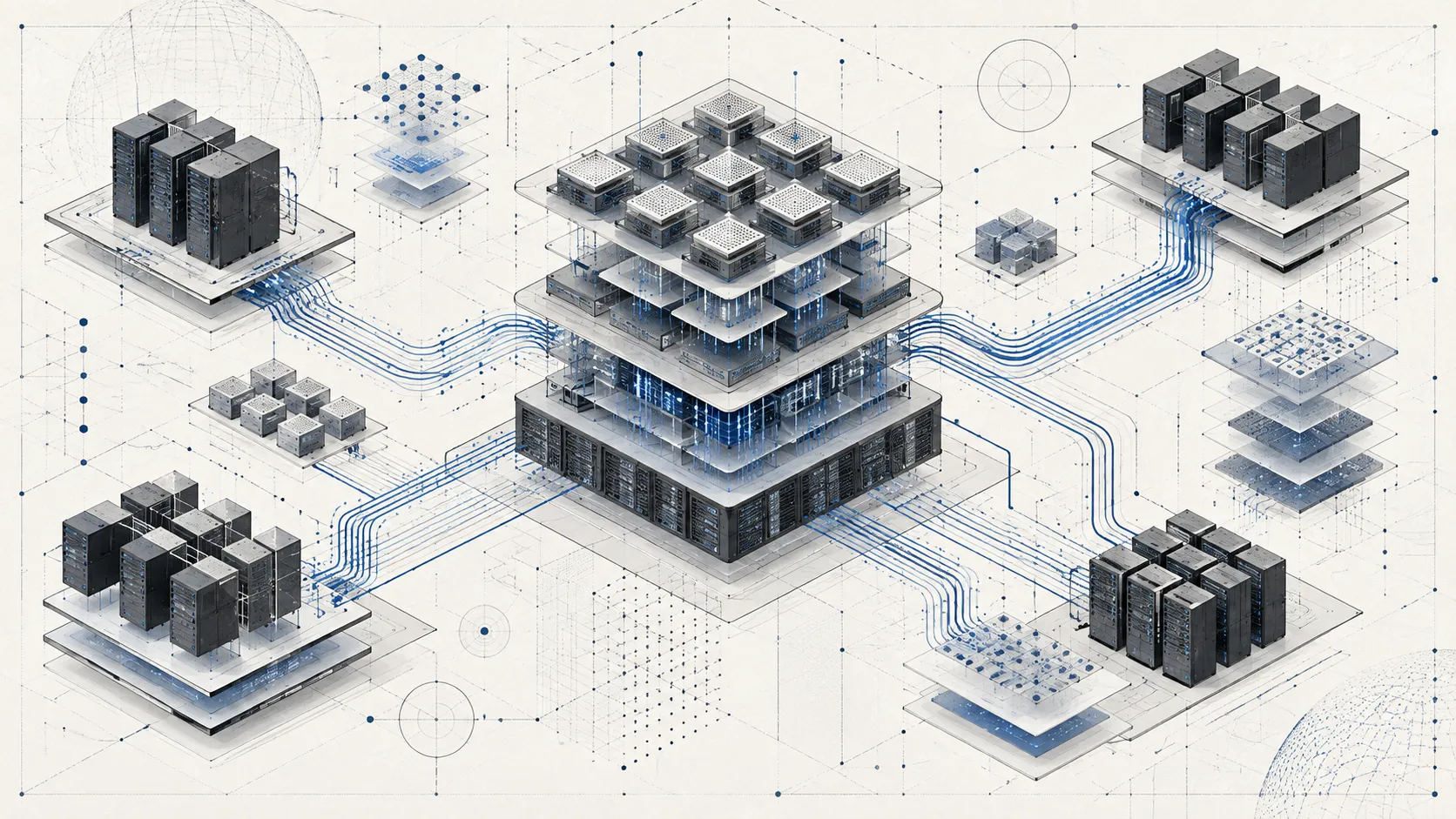
To the uninitiated, these platforms appear as isolated search engines where one types a gene symbol and prays for clean output. In reality, biological databases form a highly orchestrated, international confederation. They operate on distinct tiers of curation, strict data synchronization treaties, and structured accession namespaces.
Understanding where biological data originates, how primary read archives differ from secondary curated repositories, and which database to query for a given mechanistic question is the core prerequisite of professional computational biology.

1. Primary Nucleotide Archives: The INSDC Triangle
At the foundational bedrock of all genomics lies the International Nucleotide Sequence Database Collaboration (INSDC). Established decades ago, the INSDC is a tripartite treaty among three continental powerhouses:
- NCBI (National Center for Biotechnology Information) — United States (NIH/NLM).
- EMBL-EBI (European Bioinformatics Institute) — Hinxton, United Kingdom.
- DDBJ (DNA Data Bank of Japan) — Mishima, Japan (NIG).
These three repositories synchronize raw and assembled sequence data daily. An accession submitted to GenBank in Maryland is mirrored in Hinxton and Mishima within 24–48 hours.

Key Sub-Databases within the INSDC Ecosystem
- NCBI SRA / EBI ENA / DDBJ DRA (Sequence Read Archive): The global repository for high-throughput raw sequencing reads (FASTQ, BAM, CRAM, Oxford Nanopore POD5). If a paper publishes Illumina RNA-seq or PacBio HiFi genomes, the raw reads reside here.
- GenBank / EMBL / DDBJ Core: Primary assembled nucleotide records submitted directly by authors. These records are immutable historical submissions.
- NCBI RefSeq (Reference Sequence): Unlike GenBank, RefSeq is non-redundant and manually/computationally curated by NCBI staff. While GenBank reflects what authors submitted, RefSeq represents the authoritative biological model for a given taxon.
2. Functional Proteomics & 3D Structures
Once nucleotide sequences are translated into peptide chains, raw letters transform into catalytic molecular machines. The proteomics ecosystem is anchored by two definitive pillars: UniProt and the WWPDB.
A. UniProt (Universal Protein Resource)
UniProt is a consortium comprising the European Bioinformatics Institute (EMBL-EBI), the SIB Swiss Institute of Bioinformatics, and the Protein Information Resource (PIR). It is partitioned into two major layers:
- UniProtKB/Swiss-Prot: The gold standard. Every entry is manually reviewed and curated by PhD biocurators from peer-reviewed literature. It includes post-translational modifications (PTMs), catalytic residues, enzyme kinetics (, ), subcellular localization, and disease variants.
- UniProtKB/TrEMBL: Translated EMBL. An automated, computationally annotated repository containing hundreds of millions of protein sequences translated directly from INSDC open reading frames awaiting manual review.
B. Structural Repositories: PDB & AlphaFold DB
- PDB (Protein Data Bank / wwPDB): The single global archive of experimentally solved macromolecular structures determined via X-ray crystallography, cryo-EM, and solution NMR. Every structure is assigned a 4-character PDB code (e.g.,
4DJH,7KRR). - AlphaFold Database (EMBL-EBI & DeepMind): Houses over 200 million structural predictions generated by AlphaFold2, democratizing high-confidence 3D coordinate access for almost every cataloged protein across the tree of life.
- InterPro & Pfam: Managed by EMBL-EBI, InterPro integrates multiple domain-signature databases (Pfam, SMART, PROSITE, CDD) to classify unknown protein sequences into evolutionary families and identify catalytic domain architectures.
3. Genomic Variation & Clinical Phenotypes
Translating genomic sequences into diagnostic or therapeutic utility requires tracking where human genomes deviate from the reference coordinate frame.

- dbSNP (NCBI): The central catalog of short genetic variants (Single Nucleotide Polymorphisms, small insertions/deletions). Assigns stable reference IDs (
rsnumbers, e.g.rs429358in APOE). - ClinVar (NCBI): A freely accessible public archive of reports of the relationships between human variations and phenotypes, with supporting clinical evidence. Variants are categorized under standard ACMG/AMP criteria (Pathogenic, Likely Pathogenic, VUS, Likely Benign, Benign).
- gnomAD (Genome Aggregation Database / Broad Institute): The definitive population allele frequency resource spanning over 76,000 whole genomes and 730,000 whole exomes. Essential for calculating whether a rare patient variant is truly ultra-rare or common benign variation in global ancestry groups.
- COSMIC (Catalogue of Somatic Mutations in Cancer / Sanger Institute): The world’s most comprehensive resource for somatic point mutations, fusions, and copy number variations in human malignancies.
4. Pathways & Systems Biology
Genes and proteins do not operate in isolation; they assemble into signaling cascades, metabolic networks, and macromolecular complexes.
| Database | Primary Focus | Accession / Model Format | Curation Standard |
|---|---|---|---|
| KEGG (Kyoto Encyclopedia) | Metabolic cycles, viral infection maps, drug targets | Pathway maps (hsa04110), Orthology (K numbers) | Highly curated manual schematics |
| Reactome (EBI / NYU / OICR) | Human biological pathways modeled as reactions | Stable pathway identifiers, SBML / BioPAX | Open-source, peer-reviewed molecular reactions |
| STRING (EMBL / SIB / CPR) | Protein-Protein Interaction (PPI) networks | Combined confidence scores () | Experimental + text mining + co-expression |
| Gene Ontology (GO) | Standardized functional vocabulary (BP, MF, CC) | GO terms (GO:0006915) | Controlled bio-ontologies across species |
- KEGG: Unmatched for microbial pathway completeness, pathway visual layouts, and comparative pathway reconstruction.
- Reactome: The gold standard for mechanistic systems biology in human cells. Every event is modeled as a formal biochemical transition with explicit reactants, catalysts, and products.
- STRING: Combines biophysical binding evidence (from BioGRID, IntAct) with computational predictions and text-mining to construct protein interaction hairballs and community clusters.
5. Chemical Biology & Target Discovery
Bridging computational genomics with drug discovery requires crossing the boundary between macromolecular sequences and synthetic small molecules.
- PubChem (NCBI): The largest open chemical database in the world, holding over 115 million chemical substances, bioassays, and physical property descriptors.
- ChEMBL (EMBL-EBI): A manually curated database of bioactive molecules with drug-like properties. It compiles quantitative binding data: , , , and measurements extracted directly from primary medicinal chemistry journals.
- Open Targets Platform: An enterprise-grade integration engine uniting genetics (GWAS, ClinVar), transcriptomics, somatic mutations, and ChEMBL pharmacology to systematically score and prioritize drug target validity for human diseases.
Architectural Synthesis & Access Workflows
To harness these resources without manual browser fatigue, modern bioinformaticians access these resources programmatically via structured APIs and clean client libraries:
- NCBI E-utilities: Accessible via Python (
Bio.Entrez) and REST query parameters for automated PubMed, GenBank, and dbSNP retrieval. - EBI RESTful APIs: Fast, native JSON endpoints for Ensembl VEP, UniProt, ENA, and ChEMBL.
- UniProt SPARQL & REST: Programmatic queries supporting programmatic TSV and JSON streaming.
- BioConductor Packages in R: Specialized tools (
biomaRt,org.Hs.eg.db,clusterProfiler) that map accessions across disparate database boundaries seamlessly.
# Querying Ensembl REST API for gene cross-references (TP53: ENSG00000141510)
import requests

def fetch_gene_xrefs(gene_id="ENSG00000141510"):
    url = f"https://rest.ensembl.org/xrefs/id/{gene_id}?content-type=application/json"
    response = requests.get(url, headers={"User-Agent": "BioinformaticsResearcher/1.0"})
    if response.ok:
        data = response.json()
        print(f"Retrieved {len(data)} cross-references for {gene_id}")
        # Preview top 5 cross-referenced databases
        for entry in data[:5]:
            print(f"- [{entry['dbname']}]: {entry['primary_id']}")
        return data
    raise RuntimeError(f"Ensembl API error: {response.status_code}")

# Execute query
results = fetch_gene_xrefs("ENSG00000141510")
Execution Output:
Retrieved 157 cross-references for ENSG00000141510
- [ENS_LRG_gene]: LRG_321
- [ArrayExpress]: ENSG00000141510
- [DBASS5]: 3835
- [EntrezGene]: 7157
- [GeneCards]: TP53
Summary Rule of Thumb
| Question You Need Answered | Primary Database to Query |
|---|---|
| Where are the raw Illumina sequencing reads for this experiment? | NCBI SRA / EBI ENA |
| What is the validated, canonical mRNA sequence of this human gene? | NCBI RefSeq / Ensembl |
| What is the catalytic mechanism and phosphorylation site of this enzyme? | UniProtKB/Swiss-Prot |
| Does this gene product have an experimentally solved 3D crystal structure? | PDB (wwPDB) |
| Is this missense substitution clinically pathogenic or a benign polymorphism? | ClinVar & gnomAD |
| Which biological signaling pathway connects these 50 upregulated genes? | Reactome / KEGG / GO |
| What are the known nanomolar small-molecule inhibitors for this kinase? | ChEMBL / PubChem |
The power of modern computational biology lies not in memorizing every database, but in understanding how they cross-reference one another. When you treat the global bioinformatics ecosystem as an integrated knowledge graph, complex biological questions become tractable computational workflows.
Further Reading
- Sayers et al. Database resources of the National Center for Biotechnology Information (NCBI). Nucleic Acids Research (2024).
- The UniProt Consortium. UniProt: the universal protein knowledgebase in 2025. Nucleic Acids Research (2025).
- Berman et al. The Protein Data Bank. Nucleic Acids Research (2000).
- Kanehisa & Goto. KEGG: Kyoto Encyclopedia of Genes and Genomes. Nucleic Acids Research (2000).
- Karczewski et al. The mutational constraint spectrum quantified from variation in 141,456 humans (gnomAD). Nature (2020).