AMR Gene Mobility: Cross-Continental Metagenomic Analysis
A Snakemake computational framework resolving gut resistome mobilization dynamics, MGE co-localization, and multi-drug resistance architectures across global populations.

THE QUESTION
How can assembly-based bioinformatics and genomic co-localization decouple actual horizontal gene transfer (HGT) risk from crude read-level resistance gene abundance across human populations?
BACKGROUND
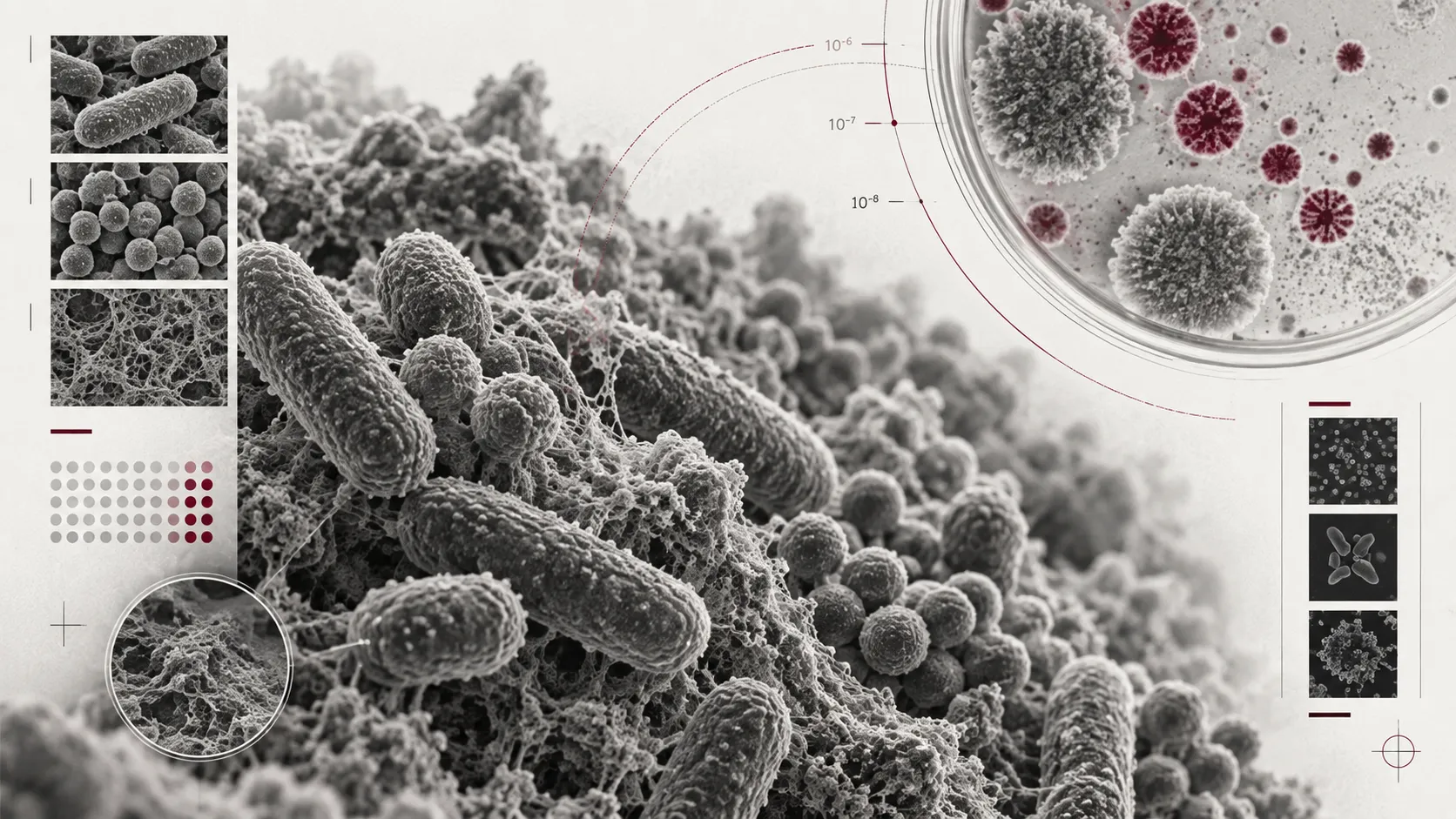
Standard read-based resistome surveys quantify aggregate gene abundance but cannot resolve genomic context or determine whether resistance determinants reside on transferable mobile genetic elements. This research implements an end-to-end, HPC-scalable computational pipeline to map physical ARG–MGE co-localization and evaluate population-level mobility patterns across international cohorts.
APPROACH OVERVIEW
COHORT INGESTION & DE NOVO ASSEMBLY
Automated retrieval of cross-population metagenomic cohorts, quality filtering (fastp), human host depletion (Bowtie2), and contig assembly (MEGAHIT).
RESISTOME & MOBILOME ANNOTATION
High-stringency identification of ARGs (RGI/CARD) alongside orthogonal detection of plasmids (MOB-suite), integrons, and insertion sequences (ISEScan).
GENOMIC CO-LOCALIZATION MAPPING
Spatial neighborhood parsing (<10 kb) to resolve whether resistance determinants are physically bound to mobile elements or locked in chromosomes.
RESISTOME MOBILITY INDEXING
Formulating normalized mobility indices and evaluating population-level variation using generalized linear mixed modeling.
CO-RESISTANCE & NETWORK TOPOLOGY
Contig-level co-selection bipartite graph construction and cross-cohort multi-drug resistance cassette discovery.
METHODS
- •Cohort Framework: Cross-continental gut metagenomes spanning diverse geographical populations and antimicrobial stewardship contexts.
- •Bioinformatics Workflow: Automated Snakemake execution of fastp, Bowtie2, MEGAHIT, RGI (CARD), MOB-suite, IntegronFinder, and ISEScan.
- •Quality Thresholds: High-confidence sequence homology filters with strict reference length coverage parameters.
- •Statistical Modeling: Non-parametric group testing, multivariate distance ordination (PERMANOVA), and mixed-effects regression models.
- •Stewardship Integration: Evaluation against international antimicrobial classification and surveillance benchmarks.
KEY DATA SNAPSHOT
RESULTS
The pipeline establishes that raw resistome abundance does not reflect mobilization potential. High-abundance intrinsic determinants remain largely chromosomal, whereas clinically prioritized resistance classes exhibit distinct genomic mobility architectures governed by biochemical mechanisms and selective pressures.
DISCUSSION
Assembly-based co-localization resolves genomic neighborhood ambiguities that read-based metagenomic profiling cannot address.
Structural and biochemical constraints appear to govern which resistance mechanisms mobilize efficiently onto transferable genetic elements.
Contig-level linkage analysis reveals multi-drug co-selection networks that explain resistance persistence across disparate antimicrobial classes.
LIMITATIONS
- •Short-read assemblies present known fragmentation challenges across extended repetitive mobile element boundaries.
- •Ecological stewardship metrics reflect country-level aggregate trends rather than individualized historical clinical exposures.
IMPACT & APPLICATION
DATA & REPRODUCIBILITY
Analytical code and specific target coordinates are currently held under institutional review and confidential protocol.
REFERENCES
- 01Alcock, B. P. et al. (2023). CARD 2023: expanded curation, support for machine learning, and resistome analysis at the Comprehensive Antibiotic Resistance Database. Nucleic Acids Research.
- 02Robertson, J., & Nash, J. H. (2018). MOB-suite: software tools for clustering, reconstruction and typing of mobile genetic elements. Microbial Genomics.
- 03Mölder, F. et al. (2021). Sustainable data analysis with Snakemake. F1000Research.